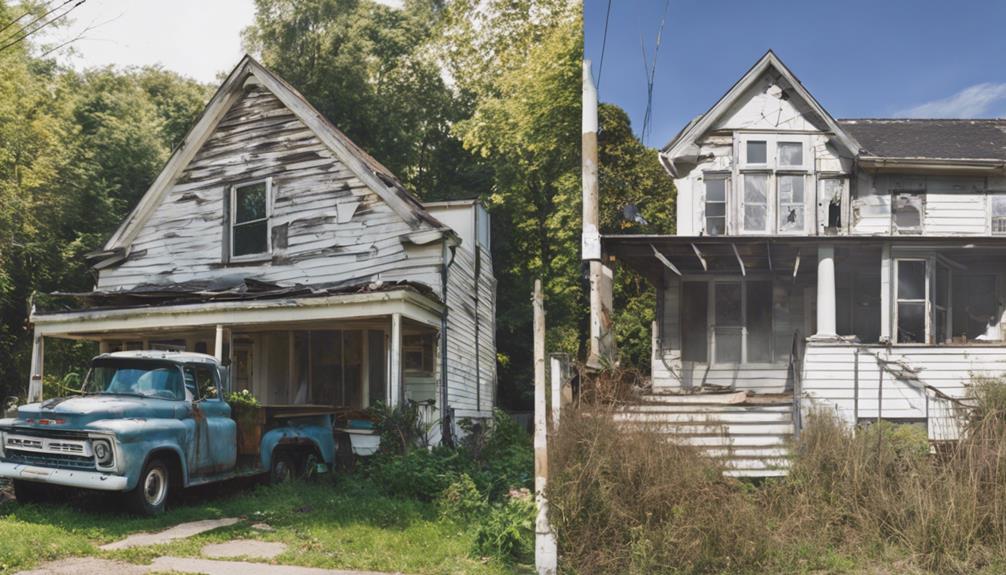

To find and profit from foreclosure properties, start by identifying opportunities through delinquency in mortgage payments, public records, and physical property neglect. Research the property's history, including ownership, sales, and liens, to gain a competitive edge. Evaluate the property's potential by analyzing its value and neighborhood market trends. Find off-market deals through direct mail campaigns, networking with realtors, and online lists. Negotiate purchase terms by understanding seller motivations and leveraging bargaining chips. Finally, renovate strategically to maximize profit. By mastering these steps, you'll be well on your way to turning a profit from foreclosure properties – and the next steps to success are just around the corner.
Identifying Foreclosure Opportunities
As the real estate market fluctuates, savvy investors can capitalize on foreclosure opportunities by recognizing the telltale signs of distress, from delinquent mortgage payments to abandoned properties. Identifying these signs is essential to finding lucrative foreclosure properties. One key indicator is delinquency in mortgage payments, which can lead to foreclosure auctions. Savvy investors should monitor public records, online listings, and local newspapers to stay informed about upcoming foreclosure auctions. These auctions often present opportunities to acquire properties at discounted prices.
Another indicator of distress is physical property neglect, such as overgrown lawns, broken windows, or accumulated trash. These signs may indicate that the property owner is struggling to maintain the property, increasing the likelihood of foreclosure. Government seizures, such as tax liens or code violations, can also signal potential foreclosure opportunities. Investors should research public records to identify properties with outstanding tax debts or code violations, as these may be more likely to enter foreclosure.
Researching Property History
A property's history, including its ownership, sales, and lien records, offers essential insights for investors seeking to uncover potential foreclosure opportunities. This historical data provides a thorough understanding of the property's past, helping investors identify potential red flags and opportunities. By delving into a property's history, investors can uncover important information, such as previous sales prices, ownership transfers, and outstanding liens.
Property deeds, which document property ownership, are a valuable resource for investors. These records can reveal information about the property's chain of ownership, including the date of purchase, sale price, and any outstanding liens. Historical records, including county records and archived documents, can provide additional insight into a property's past, including any previous foreclosure proceedings or tax delinquencies.
To access these records, investors can visit the county recorder's office or conduct online searches through public databases. Many counties also provide online portals for searching property records, making it easier for investors to access this valuable information. By conducting thorough research on a property's history, investors can gain a competitive edge in the foreclosure market, identifying potential opportunities and mitigating potential risks.
Evaluating Property Potential
When evaluating the potential of a foreclosure property, it is essential to take into account two critical factors: property value analysis and neighborhood market trends. A thorough analysis of the property's value will help determine its potential for resale or rental income, while understanding neighborhood market trends can reveal opportunities for appreciation or cash flow. By examining these key factors, investors can make informed decisions about which properties to pursue and how to maximize their returns.
Property Value Analysis
Evaluating the potential of a foreclosure property requires a thorough analysis of its value, which involves appraising the property's condition, comparable sales data, and local market trends. This in-depth approach helps investors identify opportunities and mitigate risks. To determine a property's value, investors can employ various appraisal methods, including the income approach, sales comparison approach, and cost approach. Each method provides a detailed perspective on the property's value, allowing investors to make informed decisions.
| Appraisal Method | Description | Investment Strategy |
|---|---|---|
| Income Approach | Estimates value based on potential income | Focus on properties with high rental yields |
| Sales Comparison Approach | Compares property to similar sales | Identify undervalued properties in a hot market |
| Cost Approach | Calculates value based on replacement cost | Look for properties with high renovation potential |
| Broker Price Opinion | Estimates value based on broker expertise | Utilize for quick, low-cost valuations |
| Automated Valuation Model | Uses algorithms to estimate value | Ideal for bulk purchases or rapid analysis |
Neighborhood Market Trends
Understanding the local market trends is essential for accurately evaluating a foreclosure property's potential, as it directly impacts the property's value and potential for resale or rental income. A thorough analysis of neighborhood market trends provides valuable insights into the property's potential for appreciation, rental income, and resale value.
One key aspect to examine is commuter demographics, including the proximity to public transportation, major highways, and employment centers. This information can help determine the property's desirability and potential for attracting tenants or buyers. The local economy is another critical factor to explore, including the area's job market, unemployment rates, and major industries. A thriving local economy can indicate a high demand for housing and a potential for increased property values.
Additionally, it’s crucial to research the local real estate market, including current listings, recent sales, and the overall supply and demand. This information can help you determine the property’s potential for resale or rental income and make informed decisions about the property’s potential for profit. By carefully evaluating neighborhood market trends, you can gain a deeper understanding of the property’s potential and make informed investment decisions. Moreover, staying updated on changes in local zoning laws and upcoming development projects can significantly impact property values and investment opportunities. As you engage with various market stakeholders, consider leveraging navigating the housing market tips that can further enhance your strategy. Connecting with local real estate agents and attending community meetings can provide valuable insights that complement your research and guide your investment choices.
Finding Off-Market Deals
When searching for off-market deals, it's essential to think outside the traditional listings and explore alternative avenues. By leveraging targeted marketing strategies, forging relationships with industry insiders, and tapping into specialized resources, investors can uncover hidden gems that others may overlook. In the following sections, we'll examine three key approaches to finding off-market deals: direct mail campaigns, networking with realtors, and online foreclosure lists.
Direct Mail Campaigns
More than 80% of distressed homeowners respond to direct mail campaigns, making them an effective way to discover off-market deals that can be transformed into profitable investments. To capitalize on this, it's essential to build a targeted list of motivated sellers. This can be achieved through list building, which involves identifying and compiling a database of distressed homeowners who are likely to be motivated to sell. This list can be sourced from public records, online directories, and other vital sources.
Once the list is built, a well-crafted direct mail campaign can be launched to reach these motivated sellers. Campaign tracking is pivotal to measure the effectiveness of the campaign and make data-driven decisions. This involves monitoring response rates, tracking conversions, and analyzing the return on investment (ROI) of the campaign. By continually refining and optimizing the campaign, investors can increase their chances of finding off-market deals that can be turned into profitable investments. By mastering direct mail campaigns, investors can gain a competitive edge in the real estate market and reveal lucrative investment opportunities.
Networking With Realtors
By nurturing strong relationships with realtors, investors can access their extensive networks and gain entry to off-market deals that might not be publicly advertised. This is especially valuable in the foreclosure market, where motivated sellers may prefer to keep their properties private. By developing strong Realtor relationships, investors can establish themselves as the preferred buyer for off-market deals, often at a discount. Realtors, driven by the potential for agent commissions, are more likely to share these exclusive opportunities with trusted investors. In exchange, investors can offer to pay a finder's fee or share a percentage of the profit, motivating the realtor to continue providing access to these hidden gems. Through collaboration, investors and realtors can form a mutually beneficial partnership, driving profits for both parties. By prioritizing Realtor relationships, investors can gain a competitive edge in the foreclosure market, revealing exclusive deals that others may miss.
Online Foreclosure Lists
In addition to leveraging Realtor relationships, investors can also uncover off-market deals by tapping into online foreclosure lists, which provide access to a vast array of distressed properties not publicly advertised. These lists offer a treasure trove of opportunities for savvy investors, providing foreclosure data that can be leveraged to find hidden gems. By scouring online foreclosure lists, investors can uncover properties at various stages of distress, from pre-foreclosure to bank-owned properties.
| Benefits | Description |
|---|---|
| Access to hidden gems | Uncover properties not publicly advertised |
| Early bird advantage | Get ahead of the competition with exclusive access |
| Diverse property selection | Find properties at various stages of distress |
| Time-saving | Streamline your search with curated foreclosure data |
| Profit potential | Capitalize on undervalued properties |
Online auctions and foreclosure lists can be a goldmine for investors, offering a wealth of opportunities to snag properties at discounted prices. By leveraging these resources, investors can turn a profit by flipping or renovating these distressed properties.
Negotiating Purchase Terms
Determining the seller's motivations and constraints is essential to uncover potential bargaining chips that can be leveraged to negotiate favorable purchase terms. Understanding the seller's motivations is pivotal in negotiating a profitable deal. For instance, a seller facing foreclosure due to poor credit scores may be more motivated to sell quickly, providing an opportunity to negotiate a better price. On the other hand, a seller who is relocating for a job opportunity may be more flexible with their asking price.
Identifying the seller's motivations can help you tailor your negotiation strategy. For instance, if the seller is motivated by a quick sale, you may be able to negotiate a discount in exchange for a rapid closing. Conversely, if the seller is motivated by a high price, you may need to be more aggressive in your negotiations.
When negotiating purchase terms, it's essential to prioritize your goals and be willing to walk away if the terms aren't favorable. Be respectful and professional in your negotiations, but don't be afraid to assertively advocate for your interests. By understanding the seller's motivations and being prepared to negotiate, you can secure a profitable deal and turn a foreclosure property into a lucrative investment.
Renovating for Maximum Profit
With a profitable purchase secured, the next critical step in maximizing returns is to strategically renovate the foreclosure property to appeal to potential buyers and command top dollar. A well-planned renovation can greatly enhance the property's value, but it requires careful consideration of design elements, material costs, labor management, project timelines, and budget optimization.
Effective renovation planning involves identifying areas of the property that need attention, prioritizing tasks, and allocating resources accordingly. This includes evaluating the condition of essential systems, such as plumbing, electrical, and HVAC, as well as upgrading cosmetic features like flooring, fixtures, and appliances. Design elements, such as modern color schemes, stylish fixtures, and sleek finishes, can significantly enhance the property's appeal.
To optimize renovation costs, it's essential to carefully manage material costs, labor, and project timelines. This involves sourcing materials at competitive prices, hiring skilled laborers, and establishing realistic project timelines. Budget optimization is also critical, as it enables investors to allocate resources efficiently and minimize unnecessary expenses. By balancing renovation costs with potential returns, investors can maximize their profit margins and achieve a successful exit strategy. By following these guidelines, investors can transform a distressed property into a desirable home, ultimately commanding top dollar from potential buyers.
Frequently Asked Questions
Can I Really Make a Profit From Buying Foreclosed Properties?
Indeed, it is possible to turn a profit from buying foreclosed properties, but it's important to understand the nuances of the market. By staying attuned to market trends, savvy investors can capitalize on undervalued properties. Additionally, leveraging financial leverage strategically can amplify returns. However, it's essential to approach this venture with a clear-eyed understanding of the risks and rewards, as well as a solid grasp of local market dynamics and regulatory requirements.
How Do I Avoid Buying a Property With Hidden Defects?
As you venture into the world of foreclosure investing, beware the siren's song of hidden dangers lurking beneath the surface. Avoiding properties with concealed defects requires a keen eye and strategic approach. Conduct thorough property inspections to uncover potential pitfalls, and don't be swayed by cosmetic facades. A meticulous examination can reveal hidden structural issues, environmental hazards, or concealed damage, saving you from a costly nightmare.
What if the Previous Owner or Tenant Refuses to Vacate?
When a previous owner or tenant refuses to vacate a property, it's important to understand the legal landscape. Occupancy rights vary by jurisdiction, and eviction strategies must be tailored to the specific situation. A thorough understanding of local laws and procedures is essential to navigate the eviction process effectively. It's important to consult with a legal expert to guarantee compliance with regulations and minimize potential disputes.
Can I Buy a Foreclosure Property With Bad Credit?
The elusive dream of owning a foreclosure property, tantalizingly within reach, yet seemingly out of grasp for those with imperfect credit. But fear not, for it's not entirely impossible to secure a foreclosure deal with a less-than-stellar credit score. While a good credit score can open doors, a spotty financial history doesn't necessarily slam them shut. With careful planning, alternative financing options, and a thorough understanding of your credit report, you may still be able to snag that coveted foreclosure property.
Are Foreclosure Properties Always a Good Investment Opportunity?
Foreclosure properties are not always a good investment opportunity. Market fluctuations can greatly impact property values, and local regulations may affect the buying process. It's important to conduct thorough research and due diligence to guarantee a profitable investment. A detailed analysis of the property's condition, market trends, and local regulations is vital to making an informed decision. Blindly investing in foreclosure properties can lead to financial losses, underscoring the need for a meticulous approach.