
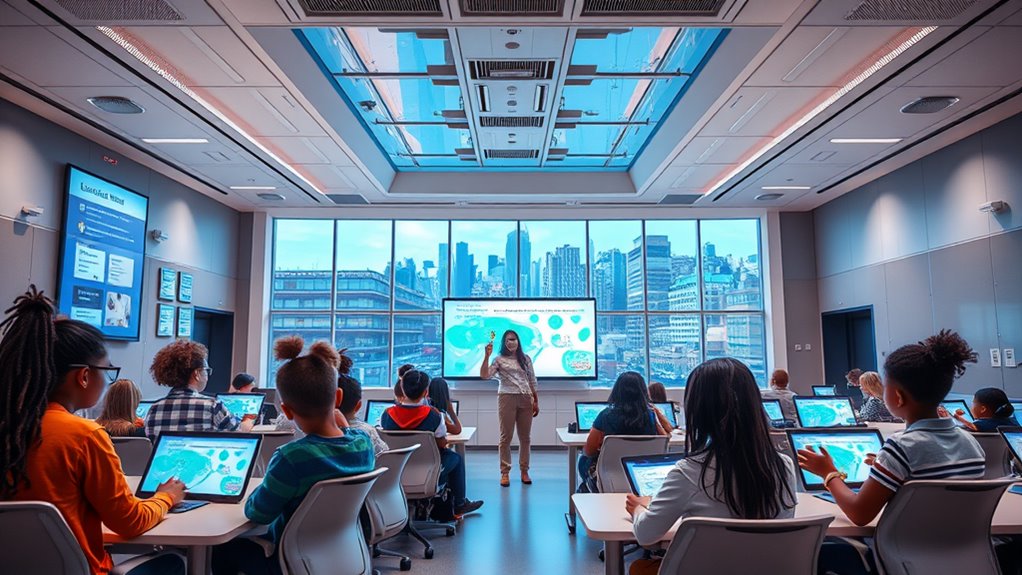
The future of personalized learning through technology is bright, driven by innovations like adaptive learning and artificial intelligence. These advancements facilitate customized educational experiences that cater to individual needs, promoting learner autonomy and engagement. Data-driven insights improve the effectiveness of teaching, allowing educators to adapt their strategies based on continuous feedback. Mobile learning innovations democratize education, enabling access to resources anytime and anywhere, as gamification boosts motivation through interactive elements. As technology continues to evolve, addressing equity and integration challenges will be vital. Discover what trends and strategies lie ahead in this transformative expedition.
The Rise of Adaptive Learning
The emergence of adaptive learning technologies has transformed the educational environment, tailoring instruction to meet the diverse needs of individual students. This innovative approach emphasizes a student-centric design, empowering learners to take control of their educational paths. By utilizing learning analytics, educators can gain insights into students' progress and learning patterns, allowing for timely and personalized feedback that promotes skill mastery.
Adaptive learning systems provide instructional flexibility, enabling educators to customize curricula to better align with each student's unique requirements. This level of curriculum customization not only improves learner autonomy but also encourages deeper engagement with the material, as students feel a greater sense of ownership over their learning experiences. Engagement strategies that incorporate adaptive technologies are proving crucial in cultivating motivation, ensuring students remain committed to their academic pursuits.
Moreover, the shift in the direction of adaptive learning signifies a departure from traditional, one-size-fits-all methodologies. Instead, it emphasizes a dynamic educational environment where instruction is responsive to the evolving capabilities and interests of each learner. As educational institutions leverage these technologies, they position themselves at the forefront of innovation, ready to meet the demands of a swiftly changing world. In the end, the rise of adaptive learning promises not only to improve educational outcomes but to redefine the very nature of how knowledge is imparted and acquired, creating a more equitable and effective learning ecosystem.
Role of Artificial Intelligence
Utilizing the potential of artificial intelligence (AI) has become a game-changer in the domain of personalized learning. The integration of AI algorithms has transformed how educational content is delivered, ensuring that each learner receives customized experiences that cater to their unique needs. With the capability to analyze vast amounts of data, these algorithms facilitate learning analytics that enable educators and institutions to make data-driven decisions.
One of the most significant advantages of AI is the provision of personalized feedback. Intelligent tutoring systems leverage predictive modeling to assess student performance in real-time, allowing for immediate adjustments to instructional strategies. This responsive approach not only improves comprehension but also encourages student engagement, creating a dynamic learning environment.
Moreover, AI-driven automated assessments streamline the evaluation process, reducing the administrative burden on educators while maintaining high standards of accuracy. By employing performance tracking mechanisms, these systems can identify gaps in knowledge and recommend targeted content that addresses those deficiencies. Content recommendations are further refined through machine learning, ensuring that the materials presented align with each student's learning trajectory.
In essence, the role of AI in personalized learning transcends mere improvement; it establishes a sophisticated framework that optimizes educational outcomes. As we utilize the strength of AI, we are not just enhancing individual learning experiences but also redefining the realm of education itself, empowering both learners and educators to achieve unprecedented heights of success.
Data-Driven Insights for Educators
As educational institutions increasingly embrace technology, data-driven insights have emerged as an essential component for enhancing teaching effectiveness and student outcomes. The utilization of learning analytics empowers educators to make informed decisions, tailoring instructional strategies to meet the unique needs of each learner. This shift in direction towards a more personalized approach allows for dynamic curriculum customization, nurturing an environment where both teachers and students can thrive.
Key benefits of leveraging data-driven insights include:
- Enhanced Student Performance: By analyzing engagement metrics and assessment tools, educators can identify areas where students excel or struggle.
- Informed Teacher Feedback: Continuous feedback loops enable educators to refine their methods based on real-time data.
- Effective Progress Tracking: Thorough data visualization allows for quick assessment of student progress, ensuring timely interventions when necessary.
- Targeted Instructional Strategies: Data-driven insights facilitate the alignment of teaching methods with individual learning styles, increasing overall engagement.
Mobile Learning Innovations
Transforming traditional educational paradigms, mobile learning innovations utilize the strength of portable technology to facilitate learning anytime and anywhere. These advancements not only democratize education but also empower learners by providing them with instant access to a wealth of resources and information. The integration of mobile accessibility into educational frameworks guarantees that all learners, regardless of their location, can engage with content that is customized to their unique needs.
At the core of mobile learning innovations lies the emphasis on user interface design. A well-structured user interface improves the learning experience by making navigation intuitive and efficient, thereby minimizing barriers to information. This is particularly significant in a world where time is of the essence; streamlined access to educational materials allows learners to maximize their productivity and focus on achieving their goals.
Moreover, the rise of mobile applications designed for personalized learning cultivates an environment in which users can curate their educational experiences. With features like adaptive learning paths and real-time feedback, these tools cater to individual learning styles and paces, transforming passive consumption of information into active participation.
As mobile learning continues to evolve, its potential to shape the future of education is immense. Institutions that leverage these innovations will not only improve engagement but also prepare students to thrive in an increasingly mobile-centric world. In the end, embracing these technologies is not merely an option; it is a strategic imperative for those seeking to maintain a competitive edge in the educational environment.
Gamification in Education
Gamification in education transforms traditional learning by incorporating game-like elements, creating engaging experiences for students. This approach not merely improves motivation but likewise provides rewards that encourage a sense of achievement. As educators explore gamification, the potential to improve learning outcomes becomes increasingly evident.
Engaging Learning Experiences
In recent years, the integration of gamification in education has emerged as a potent strategy to improve student engagement and motivation. By leveraging interactive platforms, educators can transform traditional teaching methods into dynamic learning experiences that resonate with today's digitally-savvy learners. This approach not only improves learner autonomy but also encourages collaboration through immersive storytelling and collaborative projects.
Key components of gamified learning include:
- Personalized assessments that adapt to individual student needs
- Multimedia resources that cater to various learning styles
- Real-time analytics to track progress and provide actionable student feedback
- Diverse content that keeps students invested and challenged
Motivation and Rewards
Motivation plays a fundamental role in the effectiveness of educational experiences, particularly within the context of gamification. By utilizing intrinsic motivation and strategically employing extrinsic rewards, educators can create an environment where emotional engagement flourishes. Personalized feedback and recognition systems are vital tools in this endeavor, as they acknowledge individual achievements, promoting a growth mindset and encouraging learner autonomy.
The following table illustrates the elements that drive motivation within gamified educational frameworks:
| Element | Impact on Motivation |
|---|---|
| Intrinsic Motivation | Improves self-driven learning |
| Extrinsic Rewards | Reinforces positive behaviors |
| Achievement Recognition | Validates progress and effort |
| Social Collaboration | Builds community and shared goals |
Goal setting is essential, as it empowers learners to take ownership of their educational path. By incorporating social collaboration, students both cultivate relationships and improve their learning experience through shared knowledge. In the end, a well-structured gamification strategy can transform educational environments, driving motivation and nurturing a culture of achievement recognition that propels students toward success.
Virtual and Augmented Reality
Immersion is a key aspect of improving the educational experience, and virtual and augmented reality (VR and AR) technologies offer transformative possibilities for personalized learning. These innovative tools facilitate immersive experiences that nurture deeper comprehension and retention of knowledge through spatial learning and interactive environments. By engaging multiple senses, VR and AR can elevate increased engagement and motivation among learners.
Consider the following benefits of these technologies:
- Collaborative simulations that promote teamwork and problem-solving skills.
- Virtual classrooms that transcend geographical barriers, connecting students worldwide.
- Experiential education that allows learners to practice real-world applications in a safe, controlled environment.
- Digital storytelling that transforms complex concepts into engaging narratives.
With VR and AR, educators can create interactive environments that simulate real-world scenarios, offering sensory feedback that is vital for experiential learning. Students can navigate through virtual worlds, exploring subjects like science, history, and art in ways that traditional methods simply cannot replicate. These technologies also empower learners to tailor their educational paths, making learning more meaningful and relevant.
As personalized learning continues to evolve, the integration of VR and AR will become necessary in equipping students with the skills necessary for a swiftly changing world. The potential for these platforms to create dynamic, interactive, and engaging educational experiences is not just a trend; it is a revolution in learning that heralds a new era of education. Embracing these tools will not only improve the learning experience but additionally prepare learners to thrive in an increasingly complex and interconnected global environment.
Challenges in Implementation
Implementing personalized learning through technology is not without its challenges, particularly concerning data privacy and resource allocation. Ensuring the protection of student information is paramount, as schools navigate the complex terrain of regulations and ethical considerations. Furthermore, limited financial and human resources can hinder the effective integration of technology into educational environments.
Data Privacy Concerns
How can educators effectively utilize the potential of personalized learning technology without compromising student data privacy? As the environment of personalized learning evolves, it becomes imperative that educational institutions prioritize data privacy and security. Failure to do so not just jeopardizes student trust but additionally exposes institutions to significant legal and ethical ramifications.
To navigate these challenges, educators must focus on:
- Data Security: Implement robust data encryption methods to safeguard student information.
- Privacy Policies: Establish clear privacy policies that outline data usage and sharing practices.
- Consent Management: Guarantee that informed consent is obtained from students and guardians regarding data collection.
- User Transparency: Maintain open communication about how data is utilized and the measures in place for breach prevention.
Resource Allocation Issues
The successful integration of personalized learning technology in educational environments hinges on effective resource allocation, which often presents significant challenges for institutions. Resource distribution is frequently hindered by budget constraints that limit funding allocations for technology investment and necessary infrastructure upgrades. As institutions endeavor to optimize their resources, they must navigate complex policy implications that affect not just immediate expenditures but also long-term sustainability.
Critical to overcoming these challenges is thorough educator training, ensuring that staff are equipped to utilize new technologies effectively. Nevertheless, without adequate funding and strategic resource optimization, such training can fall victim to the very budget constraints that inhibit progress. Institutions must confront infrastructure challenges that arise when attempting to implement personalized learning solutions, as outdated systems can stifle innovation and prevent successful deployment.
Ultimately, the future of personalized learning through technology will depend on institutions' ability to confront these resource allocation issues head-on. By prioritizing strategic investments and cultivating a culture of continuous improvement, educational leaders can leverage the full potential of personalized learning, transforming educational outcomes for students and empowering educators in the process.
Equity and Access Considerations
Addressing equity and access considerations in personalized learning is crucial for ensuring that all students can benefit from technological advancements. The digital divide remains a significant barrier, hindering many students from accessing the rich resources technology offers. Consequently, stakeholders must prioritize the development of inclusive technology that accommodates diverse learning needs and backgrounds.
Key strategies to advance equity in personalized learning include:
- Promoting community partnerships that connect schools with local organizations to provide resources and support.
- Investing in affordable solutions that enable access to devices and high-speed internet, particularly in underserved areas.
- Implementing universal design principles to create adaptable learning environments that cater to all students, regardless of their abilities.
- Enhancing tech literacy initiatives to empower students, educators, and families with the skills needed to navigate digital tools effectively.
The policy implications of these considerations are profound. Policymakers must advocate for equitable resources, ensuring that schools are well-equipped to implement personalized learning strategies. This requires a commitment to nurturing an environment where all students can thrive, irrespective of socioeconomic status.
Ultimately, addressing these equity and access considerations is not merely a moral imperative; it is critical for utilizing the full potential of personalized learning through technology. By committing to these initiatives, we can bridge the digital divide and create a future where every student enjoys the benefits of customized educational experiences.
Future Trends to Watch
As stakeholders work in the direction of bridging the digital divide and ensuring equitable access to personalized learning, it is essential to reflect on the emerging trends that will shape the future of educational technology. One significant trend is the emphasis on learner autonomy, enabling individuals to take ownership of their educational paths customized to their unique needs and aspirations.
The integration of advanced technologies will redefine how learners interact with content, facilitating seamless technology integration that improves engagement and comprehension. Future skills, such as critical thinking, adaptability, and digital literacy, will become paramount as educational models transform to meet the demands of an increasingly complex world.
Moreover, the shift toward collaborative learning environments will encourage teamwork and social interaction among peers, promoting a sense of community and shared purpose. Lifelong learning will be ingrained into the educational fabric, with systems designed to support continuous growth and development across all stages of life.
Interdisciplinary approaches will further enrich the learning experience, allowing for the synthesis of knowledge from diverse fields, consequently preparing learners for real-world challenges. Finally, cultural relevance will be a guiding principle in content creation, ensuring that materials resonate with diverse backgrounds, thereby promoting inclusivity and engagement.
These trends collectively represent a transformative environment where education becomes a dynamic, responsive, and empowering experience, effectively equipping learners to thrive in a constantly changing global society.
Frequently Asked Questions
How Can Parents Support Personalized Learning at Home?
Consider a family where parents create a dedicated study space, transforming a corner of their home into an enriching learning environment. By actively engaging in their child's educational expedition, they cultivate family engagement that improves personalized learning. Parents can support this process by tailoring resources to their child's unique interests and learning styles, encouraging goal-setting, and celebrating achievements, in the end empowering their children to take ownership of their education and thrive academically.
What Skills Do Teachers Need for Personalized Learning Tech?
Educators must nurture a diverse skill set to effectively implement personalized learning technologies. Proficiency in data analysis allows instructors to interpret student performance metrics, whereas tech integration skills guarantee seamless incorporation of tools into the curriculum. Mastery of adaptive assessment methods enables customized evaluations, and knowledge of collaborative tools encourages student engagement. Furthermore, strong instructional design capabilities are fundamental for creating effective learning experiences, ultimately promoting learner autonomy and empowering students to take charge of their education.
Are There Privacy Concerns With Personalized Learning Technologies?
Privacy concerns surrounding personalized learning technologies are paramount, particularly regarding data security and student consent. Educators and institutions must prioritize robust data protection measures to safeguard sensitive information. Moreover, obtaining explicit consent from students and guardians is crucial, ensuring transparency in how data is collected, used, and shared. A proactive approach to these concerns not just encourages trust but empowers stakeholders to leverage technology effectively as they uphold ethical standards in education.
How Does Personalized Learning Impact Student Motivation?
Personalized learning greatly improves student motivation by encouraging greater engagement through customized educational experiences. By leveraging learning analytics, educators can identify individual strengths and weaknesses, allowing them to personalize content that resonates with each learner. This individualized approach not just empowers students to take ownership of their education but likewise increases persistence and enthusiasm. As a result, personalized learning strategies are crucial in cultivating an environment where students are motivated to excel academically and personally.
What Are the Costs Associated With Implementing Personalized Learning Tech?
Implementing personalized learning technologies can greatly impact budget allocation, with estimates suggesting that schools may incur costs ranging from $200 to $500 per student annually. A thorough cost analysis reveals both initial investments in software and hardware as well as ongoing expenses for training and support. Institutions must strategically assess these financial commitments to utilize the full potential of personalized learning, ensuring resource optimization and long-term educational benefits for all stakeholders involved.


