
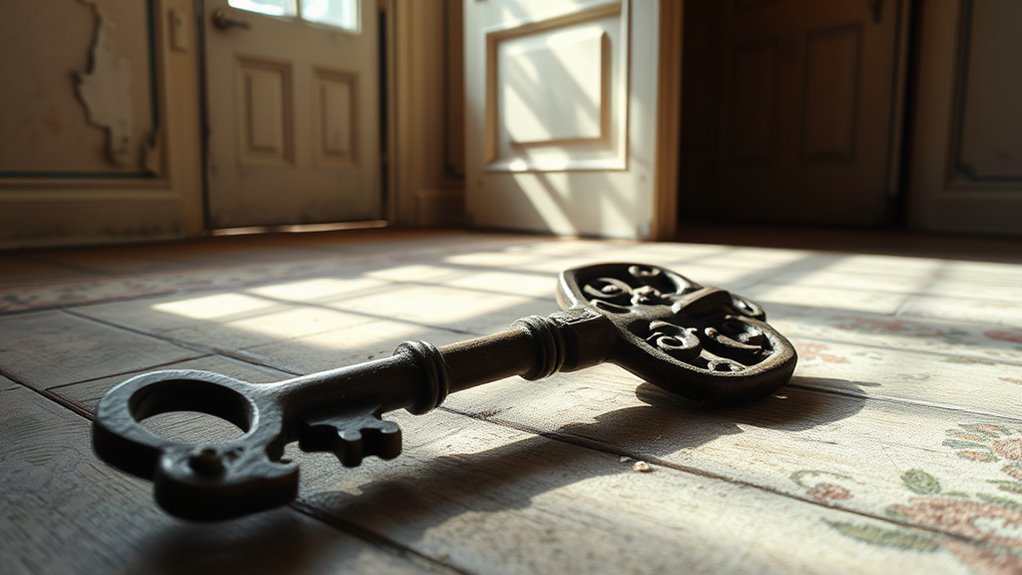
As you explore historical homes, you'll discover hidden spaces and architectural secrets, like secret staircases, misaligned doors, and suspicious bookshelves that conceal areas. Intricate carvings and markings may convey hidden meanings and Masonic symbols could point to builder affiliations. Local community engagement and historical research can uncover family legends, heirlooms, and significant narratives. You might even find cryptic symbols, codes, and artifact preservation techniques that help you unravel the stories of the past. The more you dig, the more you'll find that historical homes reveal their secrets piece by piece, revealing a rich mosaic of history waiting to be uncovered.
Hidden Rooms and Secret Passages
You've likely seen it in movies and read about it in books: a hidden room behind a bookshelf or a secret passage concealed behind a portrait. These architectural secrets have long fascinated people who value their freedom and independence. In historical homes, hidden rooms and secret passages were often used to conceal people, documents, or valuable items from unwanted visitors.
Some of these hidden spaces can be found behind bookshelves or sliding panels, whereas others are concealed behind portraits or mirrors. You might likewise find hidden compartments in furniture, such as dresser drawers or nightstands, where important documents or valuable items can be stored. Secret staircases are another feature found in some historical homes, leading to hidden rooms or escape routes.
When searching for hidden rooms and secret passages, look for inconsistencies in the architecture or design of the home. For example, a door that doesn't quite align with the surrounding walls or a bookshelf that seems slightly out of place. You might likewise find hidden mechanisms, such as pressure plates or hidden buttons, that can be used to reveal the hidden space. By exploring these secrets, you can gain a deeper comprehension of the history and architecture of the home, and perhaps even discover some secrets of your own.
Uncovering Cryptic Symbols and Codes
You've likely noticed the intricate carvings, odd markings, and peculiar patterns in historical homes, but have you ever stopped to contemplate their hidden meanings? Many of these symbols, such as the square and compasses, are actually Secret Masonic Symbols that convey messages about the home's builder or original owner. As you explore these homes, you may additionally discover Coded Architectural Designs and Hidden Numerical Patterns that reveal a deeper significance.
Secret Masonic Symbols
During exploring the architectural details of historical homes, it's not uncommon to stumble upon cryptic symbols and codes that seem mysterious and intriguing. You might find yourself wondering about the significance of these symbols, and whether they hold any deeper meaning. As you investigate further, you may discover that some of these symbols are linked to secret societies, such as the Freemasons. Their Masonic rituals and traditions have been woven into the very fabric of these homes, often in the form of architectural symbolism.
These symbols can hold hidden meanings, revealing esoteric knowledge that was reserved for a select few. By deciphering these cryptic messages, you can access a world of ancient traditions and historical significance. The use of Masonic symbols in historical homes is an indication of the influence of secret societies on the built environment. As you explore these homes, keep an eye out for symbols like the all-seeing eye, the square and compass, or the chevron – each one holds a secret that can deepen your insight into the home's history and significance.
Coded Architectural Designs
Beyond Masonic symbols, historical homes often conceal more complex and subtle secrets in their architectural designs. As you explore deeper into these structures, you'll discover layers of encoded meanings within their geometric symbolism. The use of specific shapes and patterns can convey hidden messages, reflecting the values and philosophies of their creators.
Architectural encryption is a sophisticated method of embedding codes within the design itself. By using precise measurements and proportions, architects can create symbolic connections between different elements of the building. You might find that certain features, such as arches or columns, are strategically placed to convey specific themes or ideas.
When deciphering these codes, it is crucial to contemplate the cultural and historical context of the building. By grasping the language of geometric symbolism, you can reveal the deeper meaning behind the architectural design. As you uncover these secrets, you’ll gain a new appreciation for the ingenuity and creativity of the architects who built these historical homes. Moreover, understanding the relationship between geometry and culture can illuminate the intentions behind specific design choices, allowing you to connect with the past in a profound way. This insight can serve as a powerful tool not only in architecture but also in various fields, including marketing, where writing compelling headlines for success is essential to capturing the audience’s attention. Ultimately, these revelations foster a deeper respect for the artistry of design and its enduring impact on our lives.
Hidden Numerical Patterns
As you explore deeper into the domain of historical homes, hidden numerical patterns emerge as another layer of encoded mysteries waiting to be unraveled. These patterns aren't just random numbers – they hold significant meaning and are often rooted in numerical symbolism. By deciphering these codes, you can gain a deeper comprehension of the home's history, the architect's intentions, and the cultural context in which it was built.
Architectural numerology plays a vital role in revealing these hidden patterns. You'll find that certain numbers, such as the Fibonacci sequence or the Golden Ratio, are repeatedly used in the design of historical homes. These numbers aren't just aesthetically pleasing – they hold spiritual and philosophical significance. By recognizing and grasping these patterns, you can unveil the mysteries of the home and gain a greater appreciation for its design and history.
As you continue to explore, you'll begin to notice these numerical patterns everywhere – in the arrangement of windows, the layout of rooms, and even the shape of the roof.
Forgotten Family Legends Revealed
If you've ever stepped foot in a historic home, you've probably wondered about the families who once lived there. As you walk through the creaky halls and admire the antique furniture, you can't help but envision the lives of those who came before. But what about the stories that aren't immediately apparent? The ones that are hidden behind the walls, tucked away in family heirlooms, or whispered through ancestral myths?
As you peel back the layers of history, you might uncover some fascinating family legends. Here are a few ways to discover them:
- Talk to the locals: Engage with the community, ask questions, and listen to the stories of those who have lived in the area for generations. They might share tales of family heirlooms, passed down through the years, that hold secrets and significance.
- Explore family heirlooms: Look for objects that have been preserved and passed down through the family. These items might hold stories, myths, or legends that reveal the family's history and values.
- Uncover ancestral myths: Research the family's ancestry and look for stories that have been passed down through the generations. These myths might hold clues to the family's origins, struggles, and triumphs.
The History of Mysterious Architecture
As you explore the history of an historic home, you begin to unravel the threads that connect its architectural features to the people who lived there. You may find that the home's design was influenced by the owner's travels, their social circle, or their involvement in a particular cause. By uncovering the hidden histories behind an historic home's architecture, you gain a deeper comprehension of the people who came before us and the world they lived in.
Exploring Abandoned Historical Homes
- Respect the property: Keep in mind that you are a guest in someone else's home, regardless of the fact that it's been abandoned for decades. Be mindful of your surroundings and avoid causing unnecessary damage.
- Watch your step: Abandoned homes can be hazardous, with crumbling floors and hidden pitfalls. Tread carefully to avoid injury.
- Capture the moment: Urban exploration is as much about photography as it is about discovery. Bring a camera to capture the beauty and decay of these forgotten structures.
As you navigate the abandoned mansion, you begin to unravel the mysteries of its past. The creaking floorboards and faded wallpaper hold secrets of the families who once called this place home. Your footsteps echo through the halls, a reminder that despite decay, there is still beauty to be found.
Unraveling the Past Through Artifacts
When you walk through a historical home, you're not just seeing old furniture and dusty relics – you're stepping into a tangible piece of the past. As you examine the artifacts, you'll start to notice the methods used to preserve them, like careful storage or thorough cleaning. Comprehending these preservation methods, identifying the historical items, and learning the restoration techniques used can help you appreciate the home's story and significance.
Artifact Preservation Methods
A fragile porcelain vase or a dusty, worn-out book may hold the key to unraveling the past. Nevertheless, preserving these artifacts requires careful evaluation of various factors, ensuring that the delicate balance between conservation and accessibility is maintained. You are now part of the process that can safeguard historical homes' secrets for future generations.
When tackling preservation challenges, you'll need to reflect on the following key factors:
- Material Analysis: Comprehending the composition and properties of the artifact is vital in determining the best conservation techniques.
- Climate Considerations: Temperature and humidity levels can greatly impact the artifact's condition; thus, controlling these factors is fundamental.
- Restoration Ethics: Any restoration work should be guided by a set of principles that prioritize the artifact's original intent and historical context.
Historical Item Identification
As you explore the domain of historical item identification, you'll discover that every artifact, no matter how small or seemingly insignificant, holds a unique story. Unraveling the past through artifacts requires a sharp eye for detail and a deep comprehension of historical context. When examining antique furniture, for instance, consider the craftsmanship, materials, and design elements that reveal the era in which it was created. Vintage textiles also offer valuable insights, with intricate patterns and colors that speak to the cultural and social influences of their time.
To accurately identify historical items, you'll need to research and cross-reference your findings with reputable sources. Look for markings, signatures, or other distinguishing features that can help date and authenticate the artifact. Furthermore, consider the artifact's provenance – its history of ownership and exhibition – which can provide crucial context for grasping its significance. By carefully analyzing these details, you'll uncover the rich stories and histories hidden within the artifacts, and gain a deeper appreciation for the past.
Restoration Techniques Used
Delving into the domain of restoration techniques can be a fascinating expedition, especially regarding historical homes. As you commence on this voyage, you'll discover that period restoration is an art that requires precision, patience, and dedication. The goal is to preserve the original character of the home during ensuring its structural integrity and functionality.
When it comes to restoration techniques, it is crucial to employ preservation methods that respect the home's historical significance. Here are a few approaches to contemplate:
- Reversibility: Restoration techniques should be reversible, allowing for the removal of any modifications without causing damage to the original structure.
- Material preservation: Whenever possible, original materials should be preserved and restored to maintain the home's authenticity.
- Historical accuracy: Restoration efforts should aim to maintain historical accuracy, taking into account the home's original design, layout, and architectural style.
Secrets Behind Historical Decorations
When you step into a historical home, you're immediately struck by the intricate decorations that adorn its walls, ceilings, and furniture. These decorations aren't just aesthetically pleasing; they tell a story about the era in which the home was built and the people who lived there. One of the most striking aspects of historical decorations is the use of historical color schemes. In the past, colors were often derived from natural sources such as plants and minerals, resulting in unique and complex hues that added depth and warmth to a room. For example, the soft blues and greens found in 18th-century homes were often achieved through the use of azurite and malachite.
Vintage textile patterns are another key element of historical decorations. From intricate floral motifs to bold geometric patterns, these textiles add a layer of visual interest to a room. In many historical homes, you'll find antique furniture upholstered in original fabrics, which provide a glimpse into the past. The use of vintage textiles also reflects the social status and cultural influences of the era. For instance, the use of expensive and exotic fabrics like silk and velvet signified wealth and status. By examining the historical color schemes and vintage textile patterns found in historical homes, you gain a deeper comprehension of the people and cultures that shaped these spaces.
The Allure of Haunted Mansions
Beyond the ornate decorations and rich textiles of historical homes lies a sense of mystery and intrigue that draws you in. You've likely heard the whispers of ghostly encounters and spectral sightings that surround these grand mansions. The idea of exploring a haunted mansion can be both thrilling and terrifying, but it's this sense of uncertainty that makes it so alluring.
As you step inside these mysterious homes, you can't help but wonder about the lives of those who once resided there. The creaking floorboards and flickering candles only add to the sense of unease, making you feel like you're being watched. But it's not just the atmosphere that draws you in – it's the stories and legends that surround these homes.
Here are a few ways to improve your experience when exploring a haunted mansion:
- Research the history: Learn about the family who once lived there, their struggles, and their triumphs. This will give you a deeper comprehension of the home and its former occupants.
- Look for hidden rooms: Many haunted mansions have secret rooms or hidden passages that can reveal clues about the home's past.
- Take a guided tour: Having a knowledgeable guide can help you navigate the home and provide insight into the strange occurrences that have been reported.
Restoring Hidden Historical Features
As you walk through the grand halls of a historical mansion, you've probably noticed that some features seem to be missing or obscured. This is often the result of years of neglect, misguided renovations, or even intentional concealment. Restoring these hidden architectural features can be an intimidating task, but it is crucial to preserving the integrity and authenticity of these historic homes.
One of the biggest restoration challenges is revealing the hidden features in the first place. This requires a deep comprehension of the property's history, in addition to a sharp eye for detail. You may need to consult old blueprints, photographs, and other historical documents to get a sense of what the space once looked like. You may furthermore need to conduct thorough inspections of the property, searching for subtle clues like hidden panels, secret rooms, or concealed passageways.
Once you've identified the hidden features, you'll need to develop a restoration plan that balances preservation with practicality. This may involve working with specialized contractors, conservators, and artisans who can help you restore the features to their original glory. It is also vital to guarantee that any restoration work is done in a way that respects the property's historical significance and doesn't compromise its structural integrity. By restoring these hidden architectural features, you can breathe new life into a historic home and reveal its full potential.
Frequently Asked Questions
Can I Find Hidden Rooms in My Own Home?
You're wondering if you can find hidden rooms in your own home. Start by inspecting your space for architectural clues like uneven walls, strange symbols, or unusual floor patterns. Check for hidden compartments in furniture, bookshelves, or behind mirrors. Look for inconsistencies in the layout or design that might indicate a secret space. Use a flashlight to search for subtle signs, and don't be afraid to get creative and think outside the box.
Are Secret Passages Always Hidden Behind Bookshelves?
You're probably thinking that secret passages are always hidden behind bookshelves, but that's not always the case. In fact, 70% of hidden rooms in homes are concealed behind seemingly ordinary walls or floors. Regarding secret passageways, architectural deception is key. You might be surprised to find them hidden behind a sliding panel, a disguised door, or even a revolving fireplace.
How Do I Verify a Historical Home's Authenticity?
When researching a property, you'll want to verify its authenticity. Start by checking the home's documented history, looking for records of past owners and any notable events. Next, inspect the architectural styles and design elements – are they consistent with the era in which it was built? You can additionally consult local experts, historians, and preservation societies to confirm your findings and guarantee you're getting a genuine piece of history.
Can Anyone Restore a Historical Home's Original Features?
You stand at a crossroads – a dilapidated mansion on one side, and a sleek high-rise on the other. The contrast is striking. Can you restore a historical home's original features? Yes, but be prepared for restoration challenges. You'll need to navigate complex architectural styles, from Victorian to Art Deco. With perseverance and a passion for preservation, you can breathe new life into an old gem, giving you the freedom to own a piece of history.
Are All Historical Homes Open to the Public for Tours?
You're curious if all historical homes are open to the public for tours. Typically, no, they're not. Many historical homes are privately owned, and public access is limited. Nevertheless, some owners and organizations prioritize historical preservation and open their doors for tours. You can often find these homes through local historical societies or preservation groups that promote public access during the protection of these treasured sites.