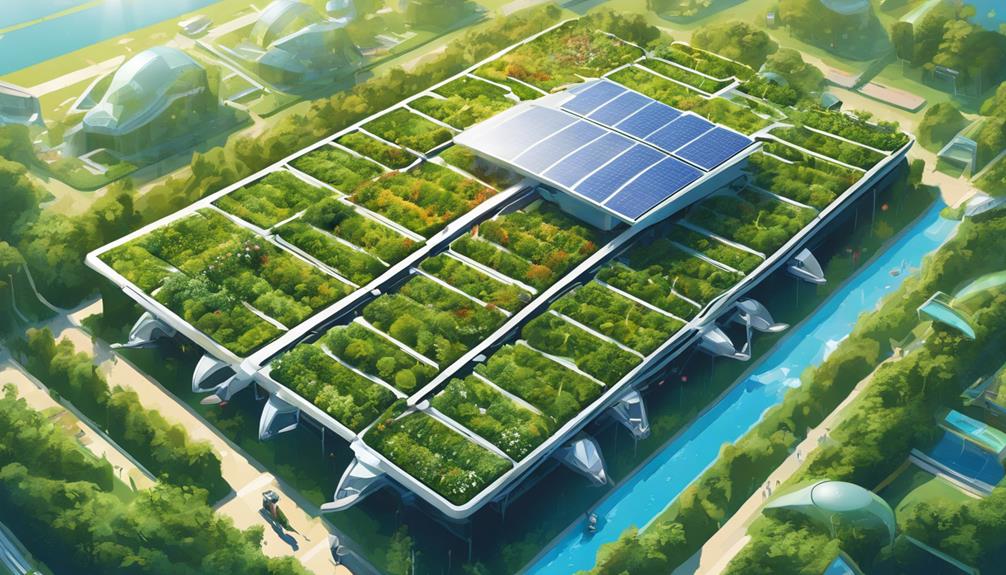
Sustainable agriculture has entered a new era of innovation, marked by the convergence of advanced technologies and eco-friendly practices. AI-powered vertical farming systems optimize crop yields and resource allocation, while precision irrigation and hydroponics promote water conservation and increased crop yields. Lab-grown protein and vertical farming for urban agriculture reduce greenhouse gas emissions and enhance food security. Soil health monitoring technologies, genetic editing for climate resilience, and biodegradable packaging for fresh produce also contribute to a more sustainable food system. As the industry continues to evolve, new innovations and solutions are emerging to transform the future of agriculture.
AI-Powered Vertical Farming Systems
Leveraging machine learning algorithms and computer vision, AI-powered vertical farming systems optimize crop yields and resource allocation in indoor agricultural environments. This innovative approach to sustainable agriculture enables farmers to cultivate crops in vertically stacked layers, maximizing space and reducing land use. By integrating artificial intelligence, these systems can analyze real-time data on temperature, humidity, and light levels to create ideal growing conditions, thereby enhancing crop resilience to climate variability.
The automation of farm operations is a key aspect of AI-powered vertical farming systems. Automated systems can monitor and adjust parameters such as nutrient delivery, pruning, and pest control, reducing labor costs and minimizing the risk of human error. This level of precision enables farmers to respond swiftly to changes in climate conditions, ensuring climate resilience and minimizing crop losses.
The application of machine learning algorithms also enables predictive analytics, allowing farmers to forecast yields, detect anomalies, and make data-driven decisions. This fusion of technology and agriculture has the potential to revolutionize the industry, enabling farmers to produce high-quality crops while minimizing environmental impact. By embracing AI-powered vertical farming systems, the agricultural sector can take a significant step towards a more sustainable and resilient future.
Precision Irrigation for Water Conservation
Precision irrigation systems, equipped with advanced sensors and data analytics, optimize water application to crops, thereby reducing waste and conserving this precious resource. By accurately detecting soil moisture levels and crop water requirements, these technologies minimize unnecessary water usage, resulting in significant water savings. Additionally, precision irrigation also enhances crop yields by ensuring that plants receive the exact amount of water needed for best growth.
Water-Saving Technologies
By adopting advanced water-saving technologies, farmers can greatly diminish their water footprint, guaranteeing a more sustainable and resilient agricultural future. One such technology is precision irrigation, which optimizes water distribution based on evapotranspiration monitoring, ensuring that crops receive the exact amount of water needed. This approach not only conserves water but also promotes drought-tolerant crops and reduces the risk of flood prevention. Additionally, water recycling and rainwater harvesting systems can collect and reuse water, reducing the demand on aquifers and preserving this essential resource. Moreover, advanced irrigation systems can detect moisture levels in the soil, preventing overwatering and reducing the risk of water waste. The implementation of these technologies can notably reduce water consumption, making agriculture more sustainable and environmentally friendly. By embracing these innovations, farmers can secure a more water-secure future, even in the face of climate change and increasing water scarcity.
Optimized Crop Yields
As water conservation becomes an increasingly important aspect of sustainable agriculture, optimizing crop yields through precision irrigation systems emerges as a pivotal strategy to maximize agricultural productivity while minimizing water waste. This approach enables farmers to allocate water resources efficiently, reducing the environmental impact of farming while maintaining or even increasing crop yields.
| Crop Yield Optimization Strategy | Benefits |
|---|---|
| Precision Irrigation Systems | Reduced water waste |
| Crop Rotation Strategies | Improved soil health |
| Weather Resistance Breeding | Enhanced crop resilience |
| Soil Moisture Monitoring | Informed irrigation decisions |
| Data-Driven Farming Practices | Increased crop yields |
Lab-Grown Protein for Sustainable Meat
Through advances in cellular agriculture, scientists have successfully cultivated lab-grown protein, offering a promising solution for sustainable meat production. This innovative approach has the potential to transform the meat industry, reducing its environmental footprint while meeting the growing global demand for protein.
Lab-grown protein, also known as clean meat, is produced by cultivating animal cells in a controlled environment, eliminating the need for large-scale animal farming. This method greatly reduces greenhouse gas emissions, water usage, and land degradation associated with traditional livestock farming. Additionally, lab-grown protein requires minimal resources, making it a more efficient and sustainable alternative.
Meat alternatives, such as cellular beef, are being developed to mimic the taste, texture, and nutritional profile of traditional meat products. These alternatives can be tailored to suit various consumer preferences, from burgers to sausages, and even exotic meats. The cellular agriculture industry is rapidly expanding, with several companies already commercializing lab-grown protein products.
The benefits of lab-grown protein extend beyond environmental sustainability. It also offers improved food safety, reduced antibiotic use, and enhanced animal welfare. As the global population is projected to reach 9.7 billion by 2050, sustainable meat production is essential to ensuring global food security. Lab-grown protein is poised to play a significant role in meeting this challenge, providing a viable solution for the future of meat production.
Vertical Farming for Urban Agriculture
In response to the growing demand for locally sourced, fresh produce in urban areas, innovators are turning to vertical farming as a sustainable solution for urban agriculture. By leveraging advanced hydroponics, aeroponics, and aquaponics, vertical farming enables the cultivation of a wide range of crops in vertically stacked layers, often within urban boundaries. This approach not only increases crop yields per square foot but also reduces the environmental footprint of traditional farming methods.
Vertical farming offers numerous benefits for urban planning, including the potential to repurpose underutilized urban spaces, reduce transportation emissions, and increase food security. By locating farms within urban areas, vertical farming can provide fresh produce to local communities, reducing reliance on industrial agriculture and enhancing food system resilience. Additionally, vertical farming can be integrated into urban planning strategies, creating green spaces that also provide ecosystem services and mitigate the urban heat island effect.
In terms of food security, vertical farming can play a critical role in ensuring a stable and reliable supply of fresh produce, particularly in areas with limited arable land or harsh climate conditions. By increasing the availability of fresh, locally grown produce, vertical farming can help address food insecurity and promote healthier eating habits. As the global population continues to urbanize, innovations in vertical farming are poised to play an essential role in shaping the future of sustainable urban agriculture.
Soil Health Monitoring Technologies
Soil health monitoring technologies have emerged as an essential component of sustainable agriculture, enabling farmers to optimize crop yields, reduce environmental degradation, and promote ecosystem services. These innovative solutions provide critical insights into soil properties, enabling data-driven decision-making and precision agriculture practices. One key application is Soil Mapping, which involves creating detailed spatial representations of soil characteristics, such as pH levels, nutrient content, and moisture levels. This information enables farmers to identify areas of soil degradation, optimize fertilizer application, and implement targeted conservation strategies.
Another vital aspect of soil health monitoring is Microbe Analysis, which involves examining the diverse microbial communities that inhabit soil ecosystems. By analyzing microbial populations, farmers can gain a deeper understanding of soil fertility, nutrient cycling, and disease suppression. This information can be used to develop targeted interventions, such as introducing beneficial microorganisms to enhance soil health. Advanced sensing technologies, including spectroscopy and sensor networks, are also being employed to monitor soil properties in real-time, enabling farmers to respond swiftly to changing conditions. By integrating these technologies, farmers can adopt more sustainable agricultural practices, reduce environmental impacts, and promote long-term ecosystem resilience.
Autonomous Tractors and Farming Robots
The integration of autonomous tractors and farming robots in agricultural practices has revolutionized the way crops are monitored and managed. By leveraging advanced sensors and artificial intelligence, these machines enable efficient crop monitoring, allowing for timely interventions and data-driven decision-making. As a result, precision farming assistance is optimized, leading to improved yields, reduced waste, and enhanced overall farm productivity.
Efficient Crop Monitoring
Autonomous tractors and farming robots are revolutionizing efficient crop monitoring by enabling farmers to gather crucial, real-time data on soil health, crop growth, and weather conditions, thereby optimizing yields and reducing waste. This is made possible through the integration of advanced technologies such as crop sensors and farm drones. Crop sensors, attached to autonomous tractors, collect essential information on soil moisture, temperature, and nutrient levels, enabling farmers to make data-driven decisions on irrigation, fertilization, and pest control. Farm drones, equipped with high-resolution cameras and sensors, provide aerial views of the farm, detecting early signs of stress, disease, or pests, allowing for targeted interventions. By leveraging these technologies, farmers can identify areas of inefficiency, reduce resource waste, and improve overall crop yields. As a result, efficient crop monitoring is becoming a cornerstone of sustainable agriculture, enabling farmers to produce more with less, while minimizing their environmental footprint.
Precision Farming Assistance
By automating routine farming tasks, precision farming assistance technologies, such as autonomous tractors and farming robots, are freeing up farmers to focus on higher-value tasks that drive business growth and sustainability. These innovative solutions are revolutionizing the agricultural industry, enabling farmers to optimize their operations and make data-driven decisions. With the help of precision farming assistance, farmers can collect and analyze farm data, gaining valuable insights into soil health, crop yields, and weather patterns. This data can be used to improve crop insurance claims, reducing the risk of crop failure and enhancing the overall resilience of farming operations. Autonomous tractors and farming robots can also assist in tasks such as planting, spraying, and harvesting, reducing labor costs and increasing efficiency. As the agricultural industry continues to evolve, precision farming assistance technologies are poised to play a critical role in shaping a more sustainable and productive future for farmers around the world.
Hydroponics for Increased Crop Yields
Crop yields in traditional soil-based farming systems are often limited by factors such as water and nutrient availability, which hydroponics can overcome. Hydroponics, a method of growing plants in nutrient-rich solutions rather than soil, offers a promising solution to increase crop yields while minimizing resource usage. By providing plants with precise amounts of water and nutrients, hydroponics can optimize nutrient uptake, leading to faster growth rates and higher yields.
In traditional farming, crop rotation is often necessary to maintain soil health and prevent nutrient depletion. Hydroponics eliminates this need, as the nutrient solution can be easily replenished and tailored to the specific needs of each crop. This flexibility allows for more frequent and diverse harvests, reducing the need for crop rotation and increasing overall yields.
Furthermore, hydroponics enables farmers to control and monitor nutrient levels, pH, and temperature, ensuring ideal growing conditions. This level of precision reduces waste, minimizes the risk of nutrient deficiency, and promotes healthy plant growth. As the global population continues to grow, hydroponics offers a sustainable solution to meet increasing food demands while reducing the environmental impact of traditional farming practices. By adopting hydroponics, farmers can increase crop yields, reduce resource usage, and contribute to a more sustainable food system.
Farm-to-Table Delivery Services Boom
The farm-to-table delivery services boom is revolutionizing the way consumers access fresh, locally sourced produce. By partnering with urban farms, these services bring high-quality, seasonal ingredients directly to customers' doorsteps, eliminating the need for intermediaries and reducing carbon footprint. This convenience, combined with the rise of meal kit services, is transforming the way people shop, cook, and think about food.
Fresh Produce at Doorstep
Fresh produce delivery services have emerged as a game-changer in the farm-to-table movement, offering consumers a convenient and sustainable way to access locally sourced fruits and vegetables. These services provide a unique doorstep experience, where consumers can receive farm-fresh produce at their doorstep, eliminating the need to visit traditional grocery stores. The produce quality is exceptional, as it is sourced directly from local farmers, ensuring that consumers receive the freshest produce possible. Home delivery of fresh produce has become a viable grocery alternative, especially for busy individuals and families who value convenience and quality. With the rise of farm-to-table delivery services, consumers can now enjoy a wide range of seasonal produce, from organic fruits to artisanal cheeses, all from the comfort of their own homes. This innovative approach to grocery shopping not only supports local farming communities but also reduces carbon footprint, making it a sustainable and environmentally friendly option.
Urban Farm Partnerships
Nearly 80% of farm-to-table delivery services are now partnering with urban farms to increase their sourcing capabilities and reduce logistical challenges, fostering a boom in the industry. This trend is driven by consumer demand for fresh, locally sourced produce and the need for more efficient supply chains. Urban farm partnerships enable delivery services to source high-quality produce while reducing transportation costs and carbon emissions.
| Urban Farm Partnerships | Benefits | Impact |
|---|---|---|
| Increased Local Sourcing | Reduced Transportation Costs | Supports Local Economy |
| Improved Supply Chain Efficiency | Increased Freshness and Quality | Reduces Carbon Emissions |
| Enhanced Community Outreach | Increased Customer Trust | Fosters Urban Entrepreneurship |
| Job Creation and Training | Supports Urban Agriculture | Promotes Sustainable Practices |
Meal Kit Convenience
In addition to consumers' desire for convenience and healthy eating, farm-to-table delivery services have witnessed a significant boom, with meal kit providers capitalizing on this trend by offering pre-measured ingredients and easy-to-follow recipes. This shift has led to a reduction in food waste, as consumers only receive the exact ingredients needed for each meal. Additionally, meal kits have encouraged home cooking, promoting a healthier and more sustainable lifestyle.
Some notable benefits of meal kit convenience include:
- Reduced food waste by up to 30%, as consumers only receive the exact ingredients needed
- Increased home cooking, promoting a healthier and more sustainable lifestyle
- Simplified meal planning, with pre-planned recipes and ingredients delivered to the doorstep
- Convenience of grocery delivery, eliminating the need for grocery shopping trips
Biodegradable Packaging for Fresh Produce
In response to growing consumer concerns about plastic waste, the agricultural industry is increasingly adopting biodegradable packaging solutions to reduce the environmental footprint of fresh produce distribution. One promising approach is the use of compostable solutions, which can replace traditional plastic packaging materials. Made from renewable resources such as cornstarch, sugarcane, or potato starch, these bioplastics can easily decompose, reducing the amount of plastic waste in landfills and oceans.
Another innovative solution gaining traction is the use of edible wraps. Made from natural ingredients like algae, plant-based polymers, or even fruit pulp, these wraps are not only biodegradable but also compostable. They can be used to package fresh produce, eliminating the need for plastic packaging. Additionally, edible wraps can even provide additional nutritional value to the consumer, making them a sustainable and healthy alternative.
The adoption of biodegradable packaging solutions is essential for reducing the environmental impact of the agricultural industry. As consumers become more environmentally conscious, the demand for sustainable packaging solutions is expected to grow. By embracing innovative solutions like compostable solutions and edible wraps, the agricultural industry can reduce its plastic footprint, minimizing its contribution to the staggering 8 million tons of plastic waste that enter the world's oceans every year.
Genetic Editing for Climate Resilience
As the agricultural industry seeks to mitigate the environmental impact of its operations, another key area of innovation is the application of genetic editing to enhance crop resilience in the face of climate change. This approach involves using advanced genetic editing tools, such as CRISPR, to introduce desirable traits into crops, enabling them to thrive in challenging environmental conditions.
Some of the key benefits of genetic editing for climate resilience include:
- Improved climate sensitivity: By introducing genes that confer tolerance to extreme temperatures, drought, or flooding, crops can better adapt to the unpredictable weather patterns associated with climate change.
- Enhanced disease resistance: Genetic editing can introduce genes that confer resistance to diseases that are exacerbated by climate change, reducing crop losses and the need for pesticides.
- Increased water efficiency: Crops can be engineered to be more water-efficient, reducing the strain on this precious resource and minimizing the environmental impact of irrigation.
- Reduced gene flow: Genetic editing can minimize the risk of gene flow from genetically modified crops to wild relatives or other crops, reducing the potential for unintended environmental consequences.
Frequently Asked Questions
Can Sustainable Agriculture Methods Be Applied to Large-Scale Industrial Farming?
Applying sustainable agriculture methods to large-scale industrial farming poses significant challenges. While crop rotation strategies can enhance soil health and biodiversity, farm size limitations can hinder their implementation. Large-scale farms often prioritize efficiency and yield over sustainability, making it difficult to adopt labor-intensive practices. However, innovative approaches, such as precision agriculture and vertical farming, can help reconcile the need for efficiency with sustainable practices, paving the way for more environmentally friendly industrial farming.
How Does Vertical Farming Impact Local Food Systems and Economies?
In Chicago's South Side, a vertical farm transformed a vacant lot, stimulating Urban Revitalization. By engaging the local community, the farm created jobs and fresh produce, fostering Community Engagement. This model can be replicated, boosting local economies and food security. Vertical farming can revitalize neglected areas, empower communities, and promote sustainable development, making it an attractive solution for cities seeking to strengthen their local food systems.
Are Genetically Edited Crops Safe for Human Consumption and the Environment?
The safety of genetically edited crops for human consumption and the environment is a pressing concern. Gene editing, while promising, raises environmental risks if not properly regulated. Unintended consequences, such as unintended gene flow or disruption of ecosystems, can have long-term, far-reaching effects. Rigorous testing and monitoring are crucial to guarantee the safe integration of genetically edited crops into our food systems and ecosystems, mitigating potential risks to human health and the environment.
Can Autonomous Farming Equipment Be Integrated Into Existing Farming Infrastructure?
Implementing autonomous farming equipment into existing infrastructure is a viable solution. For instance, the Australian company, SwarmFarm, has successfully integrated autonomous tractors into their farming operations, increasing efficiency by 30%. This integration is made possible through precision farming, machine learning, and farm robotics. By leveraging data analytics, farmers can optimize crop yields and reduce waste. With careful planning, autonomous farming equipment can seamlessly integrate into existing infrastructure, revolutionizing the agricultural industry.
Do Biodegradable Packaging Options Increase Food Waste or Spoilage Rates?
Regarding the use of biodegradable packaging options, concerns arise about potential increases in food waste or spoilage rates. However, research suggests that well-designed biodegradable packaging can actually enhance food safety by providing a more essential environment for produce. Effective packaging design plays a vital role in maintaining ideal conditions, thereby reducing spoilage. By prioritizing innovative packaging design, the industry can minimize waste while promoting a more sustainable food system.