
Designing your dream kitchen starts with evaluating your family's needs and cooking habits. Choose a layout that guarantees smooth traffic flow and efficient work zones. Next, select quality materials like durable countertops and cabinets. Focus on maximizing storage with adjustable shelving and pull-out drawers. Illuminate your kitchen with a combination of ambient, task, and accent lighting, and consider natural light sources. Choose energy-efficient appliances that fit your culinary preferences and space. Finally, add personal touches such as unique hardware, custom backsplashes, and meaningful artwork. By following these steps, you will create a kitchen tailored to your vision. Explore further concepts and tips to perfect your design.
Assess Your Needs
Before starting on your kitchen remodel, it is essential to evaluate your needs to guarantee the space meets both your functional and aesthetic requirements. A thorough assessment will enable you to create a kitchen that aligns with your lifestyle, ensuring that every element serves a purpose. Begin by considering your family requirements. The kitchen is often the heart of the home, and its design should reflect the way your family interacts within the space. Take into account the number of people in your household and their specific needs. For instance, a family with young children might prioritize safety features and durable materials, while a household of culinary enthusiasts might focus on high-end appliances and ample counter space.
Next, analyze your cooking habits. The frequency and complexity of your cooking endeavors will greatly influence your kitchen's design. If you cook elaborate meals regularly, you will benefit from a well-organized and spacious kitchen that includes a variety of storage solutions for ingredients and utensils. Conversely, if your cooking is more occasional or simple, a streamlined and minimalist approach may be more suitable. Additionally, consider the types of meals you typically prepare. An avid baker might require specialized areas for mixing and rolling dough, while someone who frequently entertains might prioritize a large island or an open-plan design to facilitate social interactions.
Choose the Right Layout
Choosing the best kitchen layout is essential for ensuring both efficiency and comfort in your cooking space. The layout you select will greatly influence how smoothly you navigate your kitchen, impacting everything from meal preparation to cleanup. To achieve best results, it is important to focus on traffic flow and work zones within the kitchen.
Traffic flow pertains to how people move through the kitchen. An effective layout ensures that there are no bottlenecks or obstacles that could disrupt the harmony of the space. Consider high-traffic areas such as the path from the refrigerator to the sink, and from the sink to the stove. These pathways should remain unobstructed to facilitate smooth movement. Implementing a well-thought-out traffic flow can prevent accidents and make the kitchen a more enjoyable place to work.
Equally important are work zones. A kitchen is typically divided into distinct areas dedicated to specific tasks: preparation, cooking, and cleaning. Each zone should be logically organized to minimize unnecessary steps and maximize efficiency. For example, the preparation zone should be near the refrigerator and pantry, making it easy to gather ingredients. The cooking zone, incorporating the stove and oven, should be adjacent to the preparation area, enabling a seamless shift from prep to cook. Finally, the cleaning zone, which includes the sink and dishwasher, should be conveniently located near the cooking area to streamline the cleanup process.
Balancing traffic flow and work zones in your kitchen layout will not only enhance functionality but also provide a space where you can exercise full control over your cooking environment. By thoughtfully designing these aspects, you can create a kitchen that is both practical and pleasurable.
Select Quality Materials
Selecting quality materials is essential to ensuring the longevity and aesthetic appeal of your kitchen. Begin by exploring durable countertop options that can withstand daily wear and tear. Additionally, investing in high-quality cabinet choices will not only enhance functionality but also elevate the overall look of your space.
Durable Countertop Options
When designing your dream kitchen, incorporating durable countertop options is essential to guarantee both longevity and aesthetic appeal. Selecting materials that offer stain resistance and heat durability can greatly enhance the functionality and resilience of your kitchen surfaces. Among the top choices are granite, quartz, and solid surface countertops, each possessing unique attributes catering to varied preferences and needs.
Granite countertops, renowned for their natural beauty and durability, provide excellent heat resistance, making them ideal for areas near stoves and ovens. However, they do require periodic sealing to maintain their stain resistance. Quartz countertops, engineered from natural quartz combined with resin, offer a non-porous surface that excels in stain resistance while also ensuring substantial heat durability. This low-maintenance option provides a combination of luxury and practicality that appeals to many homeowners.
Solid surface countertops, such as Corian, are another durable option that combines seamless aesthetics with impressive stain resistance. While they may not match the heat durability of granite or quartz, they can be easily repaired if scratched or chipped. Their ability to be molded into various shapes and designs provides a versatile choice for a custom kitchen layout.
High-Quality Cabinet Choices
Investing in high-quality cabinet materials is essential for achieving both durability and aesthetic excellence in your kitchen design. Cabinets are the backbone of your kitchen's functionality and style, and selecting the right materials is vital. Start by considering the types of woods, veneers, or laminates that not only align with your design vision but also offer longevity and resilience.
When it comes to cabinet finishes, choices like lacquer, stain, or paint can greatly impact the look and feel of your kitchen. Each finish type has distinct characteristics that can either enhance the natural beauty of the wood or add a layer of protection against wear and tear.
To make sure you make informed decisions, consider the following:
- Solid Wood: Offers timeless beauty and durability but may require regular maintenance.
- Plywood: Provides excellent structural integrity and resists warping, making it ideal for high-humidity environments.
- Medium-Density Fiberboard (MDF): Known for its smooth finish and versatility in painted finishes.
- Laminate: A cost-effective option that offers a wide range of colors and patterns, perfect for modern designs.
Lastly, do not overlook hardware styles. High-quality hardware can elevate the overall aesthetic while providing functional benefits like smooth operation and enhanced durability.
Focus on Storage Solutions
Effective storage solutions are essential for maximizing both functionality and aesthetics in your dream kitchen. An organized kitchen allows you to maintain control over your culinary environment, guaranteeing that everything is accessible and in its proper place. One critical aspect to ponder is pantry organization. A well-organized pantry can save you time and reduce stress when preparing meals. Contemplate adjustable shelving, clear containers, and labeled bins to keep your dry goods, canned items, and snacks orderly. This not only enhances the visual appeal but also makes it easy to conduct regular inventory checks, preventing over-purchasing and waste.
Another area that often goes overlooked is under sink storage. This space can be challenging due to plumbing fixtures, but with creative solutions, it can be transformed into a highly functional area. Utilize stackable bins, tension rods, and pull-out trays to maximize vertical space and keep cleaning supplies neatly arranged. By doing this, you avoid clutter and ascertain that essential items are easily reachable.
Beyond these specific areas, contemplate incorporating pull-out drawers, lazy Susans, and tiered shelving inside cabinets to optimize space utilization. Integrating these features allows for better organization of pots, pans, and smaller kitchen gadgets, ensuring that you don't have to dig through cluttered cabinets. Customizable drawer dividers can also be beneficial for maintaining order among utensils and cutlery, making it easier to find the right tool when you need it.
Consider Lighting Options
Proper lighting is an essential element in designing a dream kitchen, as it enhances both functionality and ambiance. Tailoring your lighting choices to your specific needs can transform your kitchen into a versatile and inviting space. A well-thought-out lighting plan should include a combination of ambient lighting and task illumination to make sure that every corner of your kitchen is both practical and visually appealing.
When planning your kitchen lighting, consider the following options to achieve a perfect balance:
- Ambient Lighting: This is the primary source of light that fills the entire room, creating a warm and inviting atmosphere. Ceiling-mounted fixtures, recessed lighting, and chandeliers are popular choices for ambient lighting in kitchens.
- Task Illumination: Focused lighting is essential for specific tasks such as chopping vegetables, reading recipes, or cleaning. Under-cabinet lights, pendant lights over the kitchen island, and track lighting are ideal for providing task illumination where it is most needed.
- Accent Lighting: To add depth and highlight specific areas or features, consider accent lighting. Cabinet lighting to showcase glassware, toe-kick lighting under base cabinets, and LED strip lights behind open shelving can create a stylish and functional space.
- Natural Light: Maximize the use of natural light by placing windows or skylights strategically. This not only saves energy but also enhances the overall ambiance of your kitchen.
Pick Appliances Wisely
When selecting appliances for your kitchen, it is important to assess your specific needs to guarantee functionality and efficiency. Balancing your budget with the quality of the appliances is vital to achieve a harmonious blend of performance and cost-effectiveness. Thoughtful choices in this regard will greatly enhance the overall utility and aesthetic of your dream kitchen.
Assess Appliance Needs
Selecting the right appliances is essential for creating a functional and efficient kitchen that meets your specific culinary needs. With a myriad of choices available, it is important to prioritize both energy efficiency and smart technology to guarantee that your kitchen remains not only modern but also cost-effective in the long term. When evaluating appliance needs, consider the following points to maintain control over your kitchen design process:
- Lifestyle and Cooking Habits: Evaluate your daily cooking routines and culinary preferences. An avid baker may prioritize a convection oven, while a family-oriented home might need a large refrigerator.
- Space Availability: Ensure that the appliances you choose fit seamlessly within your kitchen layout. Compact or modular designs can be beneficial for smaller spaces.
- Energy Efficiency: Opt for appliances with high energy efficiency ratings. This choice not only reduces your carbon footprint but also leads to significant savings on utility bills over time.
- Smart Technology: Invest in appliances equipped with smart technology. Features such as remote control, automated settings, and diagnostic capabilities can add convenience and enhance the overall functionality of your kitchen.
Budget and Quality Balance
Finding a balance between budget and quality is crucial when selecting appliances for your dream kitchen. Conducting a thorough cost analysis will help you understand where to allocate your resources most effectively. Begin by identifying the appliances that are non-negotiable, such as a high-quality refrigerator and a reliable stove. These are foundational elements where investing in quality can yield long-term benefits.
Next, engage in detailed budget planning to make certain that your expenditures align with your financial constraints. Prioritize your appliance list, distinguishing between essential items and luxury add-ons. This will provide a clear framework for making informed decisions. For instance, while a professional-grade oven may be desirable, a mid-range model might offer comparable performance without straining your budget.
Evaluate each potential purchase by comparing features, warranties, and energy efficiency ratings. High-efficiency appliances might have a higher upfront cost but can lead to significant savings on utility bills over time. Utilize consumer reviews and expert opinions to gauge the reliability and longevity of appliances, ensuring your investment is sound.
Add Personal Touches
Incorporating personal touches into your kitchen design allows you to create a space that is both functional and uniquely reflective of your style. One of the most effective ways to achieve this is through a custom backsplash. A custom backsplash not only serves as a practical element to protect your walls from splashes and spills, but it also acts as a canvas for your creativity. Whether you choose hand-painted tiles, a mosaic pattern, or a sleek, modern design, a custom backsplash can set the tone for the entire kitchen.
Personalized decor is another avenue to infuse your kitchen with individuality. This could include anything from framed family recipes to a curated collection of vintage cookware. The key is to select items that resonate with you and enhance the overall aesthetic of the space.
To help you get started, consider the following ideas:
- Unique Hardware: Swap out standard cabinet knobs and drawer pulls for unique, custom options that align with your design vision.
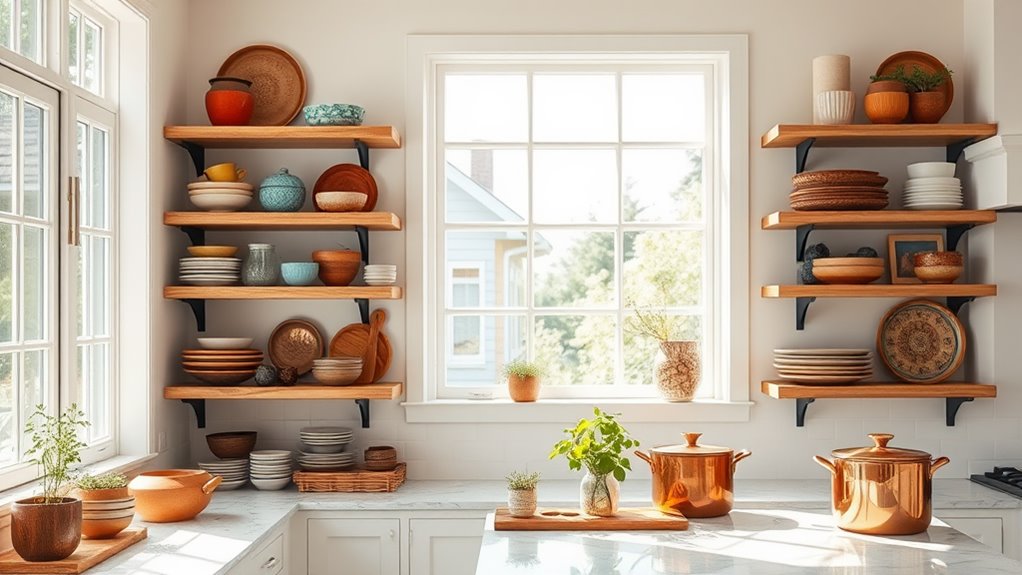
- Open Shelving: Use open shelves to display cherished items such as heirloom china, artisanal pottery, or cookbooks.
- Lighting Fixtures: Choose lighting that not only illuminates your workspace but also serves as a statement piece, like a chandelier or pendant lights.
- Artwork: Incorporate artwork that speaks to you, whether it's a vibrant painting, a sculptural piece, or a framed photograph.
Frequently Asked Questions
How Do I Budget for a Kitchen Remodel?
Budgeting for a kitchen remodel is like orchestrating a symphony; precision is key. Begin with a thorough cost estimation, breaking down expenses for materials, labor, and unforeseen contingencies. Maintain meticulous expense tracking throughout the project to guarantee adherence to your budget. By systematically monitoring costs, you can make informed adjustments as needed, ensuring financial control and the successful realization of your remodeled kitchen.
What Are the Latest Kitchen Design Trends?
The latest kitchen design trends emphasize the integration of smart appliances and the use of bold colors to create a contemporary and efficient space. Smart appliances offer enhanced control and convenience, transforming the kitchen into a highly functional area. Bold colors, such as deep blues and vibrant greens, add a dynamic and personalized touch, making the kitchen both visually appealing and uniquely tailored to individual tastes.
How Can I Make My Small Kitchen Look Bigger?
Strategically selecting subtle shades and smart lighting solutions can greatly enhance the perception of space in a small kitchen. Opt for light color schemes to reflect natural light, creating a sense of openness and airiness. Incorporate under-cabinet lighting and pendant lights to eliminate shadows and add depth. Utilize sleek, streamlined cabinetry to maintain an uncluttered, cohesive appearance. These thoughtful choices empower you to maximize your kitchen's potential, ensuring functionality and aesthetic appeal.
What Are Some Eco-Friendly Kitchen Design Ideas?
Incorporating eco-friendly design ideas into your kitchen can greatly reduce its environmental impact. Consider using recycled materials for countertops and cabinetry to promote sustainability. Additionally, incorporating energy-efficient appliances can lead to substantial energy savings, while also decreasing your carbon footprint. These choices not only enhance the aesthetic appeal of your kitchen but also demonstrate a commitment to environmental stewardship, providing you with greater control over your ecological footprint.
How Do I Hire a Reputable Kitchen Designer?
"Measure twice, cut once" is an adage that applies well to hiring a reputable kitchen designer. Begin by conducting a thorough portfolio review to assess their style and expertise. Next, examine client testimonials to gauge satisfaction and reliability. These steps provide valuable insights, ensuring you make a well-informed decision. By taking control of this process, you will secure a designer aligned with your vision and expectations.