
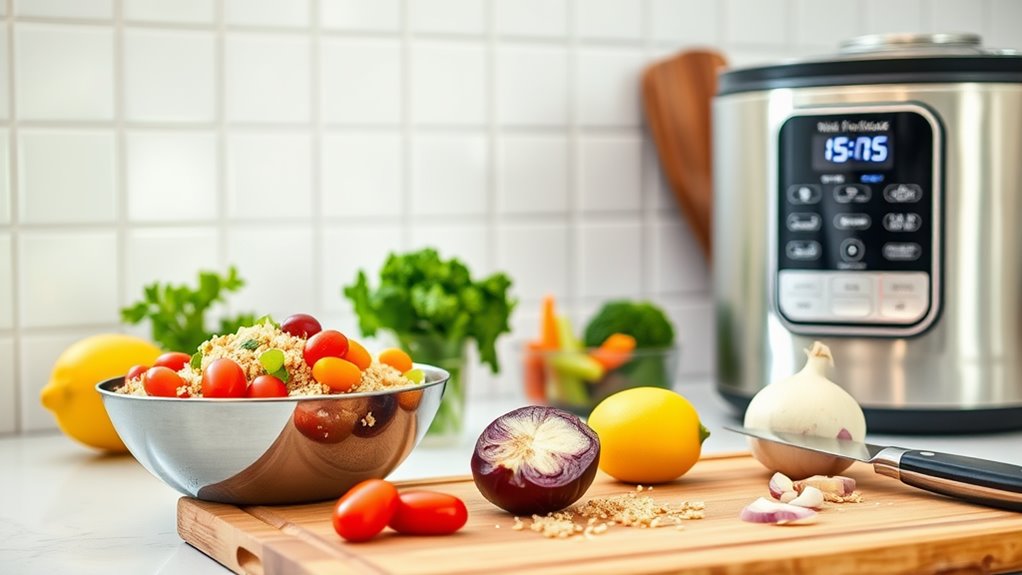
To prepare nutritious meals on a tight schedule, start by planning your meals ahead and creating a grocery list to avoid last-minute unhealthy options. Focus on buying pantry staples, fresh produce, and protein sources that can be used in multiple meals. Prep in advance techniques, like batch cooking and meal prep containers, can save you time and stress. Invest in kitchen tools like slow cookers and instant pots to streamline meal prep. For quick and healthy meals, try one-pot recipes and repurpose leftovers to reduce food waste – with a little planning, you'll be well on your way to cooking up a healthier routine.
Plan Your Meals Ahead
How often do you find yourself scrambling to decide what's for dinner, only to settle for an unhealthy, last-minute option? Planning your meals ahead can save you from this dilemma and guarantee that you serve nutritious food to your family and loved ones. A well-planned meal calendar helps you organize your meals for the week, considering your schedule, dietary needs, and preferences.
Start by setting aside some time to plan your meals for the next few days or the entire week. Look for healthy recipes that are easy to prepare and can be cooked in no time. You can find plenty of recipes online or in cookbooks that cater to your family's tastes and dietary requirements. Once you've decided on the meals, create a cooking schedule to help you stay on track.
Your meal calendar should include the meals you plan to cook, the ingredients you need, and the cooking time required for each meal. This will help you prepare ingredients in advance, avoid last-minute trips to the grocery store, and guarantee that you're serving a variety of healthy meals throughout the week. Having a meal calendar too helps you avoid food waste by planning meals around ingredients that are about to expire. By planning your meals ahead, you can save time, reduce stress, and serve nutritious meals to your loved ones.
Create a Grocery List
You'll use the meal plan you created to make a grocery list, ensuring you don't forget vital items. Focus on the ingredients required for each meal, and jot them down. By combining these ingredients with your pantry staples, you'll create an exhaustive list to guide your grocery shopping trip.
Plan Your Meals
Planning meals around your dietary needs and preferences is vital to maintaining a balanced diet. It allows you to secure that the meals you serve others are nutritious and customized to their specific requirements. To start planning your meals, consider creating a personalized meal template. This template should include spaces to note the date, meal type (breakfast, lunch, or dinner), and the names of the individuals you're serving. It's equally helpful to include a section for noting any dietary restrictions or allergies.
Using your meal template, plan out your meals for the week. Consider the ingredients you already have on hand and the time you have available for cooking. Choose meals that are quick, easy, and nutritious, and make sure to include a variety of different food groups. Once you have your meal plan in place, you can start making a grocery list. This will help you stay organized and guarantee that you have everything you need to prepare healthy meals for others.
Essential Grocery Items
Now that you have a meal plan in place, it's time to stock your kitchen with the right ingredients. In terms of preparing nutritious meals, having a well-stocked pantry is vital. Start by focusing on staples like whole grains, such as brown rice, quinoa, and whole-wheat pasta. Canned goods like beans, tomatoes, and tuna are necessary too. Don't forget to pick up a variety of fruits and vegetables, including frozen options for convenience.
If you're providing elderly assistance, consider purchasing easy-to-prepare items like soups, oatmeal, and yogurt. For special diets, be sure to include gluten-free, dairy-free, or low-sodium alternatives. Protein sources like lean meats, eggs, and tofu are must-haves as well. Don't forget to grab some healthy snacks like nuts, seeds, and dried fruits.
- Whole grains (brown rice, quinoa, whole-wheat pasta)
- Canned goods (beans, tomatoes, tuna)
- Fruits and vegetables (fresh and frozen)
- Protein sources (lean meats, eggs, tofu)
- Healthy snacks (nuts, seeds, dried fruits)
- Special dietary items (gluten-free, dairy-free, low-sodium)
Shop Smart for Ingredients
Now that you've created your grocery list, it's time to shop smart for the ingredients that will boost your meals. You'll want to focus on fresh produce necessities, like fruits and vegetables that are in season, to guarantee maximum flavor and nutrition. By additionally stocking up on pantry staples and simplifying your protein options, you'll be well on your way to preparing nutritious meals that are both delicious and easy to make.
Fresh Produce Essentials
Shopping smart for fresh produce is key to preparing nutritious meals, as it sets the foundation for a balanced diet. When selecting produce, choose items that are in season and at their peak freshness. Consider buying from local farmers or joining a community-supported agriculture (CSA) program to guarantee you get the freshest produce possible.
To make the most of your fresh produce, it's crucial to learn about fresh preservation methods. For example, leafy greens like kale and spinach can be stored in airtight containers in the fridge to keep them fresh for up to a week. Berries, conversely, can be frozen to preserve their nutrients and flavor. Learning produce storage tips can further help you reduce food waste and save time during meal prep. Store fruits and vegetables separately to maintain peak freshness. Keep fruits that release ethylene gas, such as apples and bananas, away from vegetables to prevent spoilage. By following these simple tips, you can enjoy fresh, nutritious meals even on a tight schedule.
Pantry Staples Matter
Efficiency in meal prep starts with a well-stocked pantry. You can't serve nutritious meals without the right ingredients. To guarantee you're prepared, focus on pantry staples that are versatile and nutritious. Stock up on whole grains like brown rice, quinoa, and whole-wheat pasta. Canned goods like beans, tomatoes, and vegetables are also crucial. Nuts and seeds provide healthy fats and protein, meanwhile spices and herbs add flavor to your dishes.
To maximize your pantry's potential, implement some pantry organization tips. Assign a specific shelf or container for each type of food to keep them easily accessible. Label each container so you can quickly find what you need. Use food storage ideas like airtight containers and glass jars to keep your ingredients fresh. Store heavier items at the bottom and lighter ones on top to prevent damage. By keeping your pantry organized and well-stocked, you'll save time and reduce stress when preparing meals. This will allow you to focus on serving your family and others with love and care. A well-planned pantry is the foundation of a successful meal prep routine.
Protein Options Simplified
In the context of planning nutritious meals, you're likely to encounter a variety of protein options. You don't have to be overwhelmed by the choices – simplify your shopping by focusing on a few staples.
When it comes to protein, it's vital to think about your dietary preferences and restrictions. If you're looking for convenience, protein powder can be a great option. It offers numerous benefits, including being easily digestible and providing a boost of protein in a small serving size. On the other hand, if you're looking for plant-based alternatives, you can opt for beans, lentils, or tofu. These options are as cost-effective as they are environmentally friendly.
Think about purchasing canned beans, nuts, and seeds in bulk to save time and money. You can also invest in a few crucial spices to intensify the flavor of your protein-rich meals. If you're short on time, look for pre-cooked or pre-marinated options at your local grocery store. By streamlining your protein options, you'll be able to create nutritious meals quickly and efficiently, even on a tight schedule. This will allow you to focus on serving others and enjoying quality time together.
Prep in Advance Techniques
Acquiring prep in advance techniques is key to streamlining your meal preparation process, saving you time and stress in the long run. When you prep in advance, you're saving time, in addition to ensuring that your family and loved ones are receiving nutritious meals.
To start, focus on tasks that can be completed ahead of time, such as food storage and meal assembly. Consider the following prep tasks:
| Prep Task | Description |
|---|---|
| Chop Vegetables | Chop onions, carrots, and bell peppers for future meals |
| Cook Proteins | Cook proteins like chicken, beans, and lentils for easy meal assembly |
| Portion Ingredients | Divide ingredients into individual portions for quick meal prep |
| Assemble Meal Components | Prepare components like salads, stir-fry mixes, and soup bases |
| Freeze Meals | Freeze meals like casseroles, soups, and individual portions for future use
One-Pot Meal Strategies
When you're short on time, one-pot meal strategies can be a lifesaver. To get started, you'll want to focus on quick meal planning, choosing the right pans, and making healthy ingredient swaps to maximize nutrition. By perfecting these skills, you'll be able to whip up delicious, nutritious meals in no time.
Quick Meal Planning
If you're looking for ways to save time in the kitchen, one-pot meals are a game-changer. Quick meal planning is crucial to making this strategy work. You'll need to allocate specific time blocks for meal prep, cooking, and serving. Start by identifying your weeknight meals – the ones that need to be quick and nutritious. Consider your family's preferences and dietary needs when planning these meals.
Create a schedule and assign time blocks for each meal. Allocate 30-45 minutes for one-pot meals, including prep and cooking time. Be realistic about how much time you have available each evening. If you have a particularly busy night, consider a simpler one-pot meal that can be cooked in under 30 minutes.
When planning your meals, think about the ingredients you need and make a grocery list. You'll want to have all the necessary ingredients on hand to avoid last-minute trips to the store. By planning your meals and allocating time blocks, you'll be able to cook healthy, one-pot meals even on the busiest of weeknights. This strategy will save you time and energy in the long run.
Essential Pan Choices
Clarity in the kitchen starts with a well-stocked arsenal of indispensable pans. In terms of preparing nutritious meals on a tight schedule, having the right cookware is imperative. You'll want to focus on pans that are versatile, long-lasting, and easy to clean.
Fundamental Pans for One-Pot Meals
You'll need a few key pans to get started:
- Cast Iron Cookware: A cast-iron skillet is ideal for one-pot meals, as it can be used for sautéing, searing, and cooking a variety of dishes. It's extremely durable and can be used at high heat.
- Large Stockpot: A large stockpot is perfect for cooking big batches of soups, stews, and chili. Look for one with a heavy bottom for even heat distribution.
- Non-Stick Alternatives: If you're not a fan of cast iron, consider non-stick alternatives like ceramic or stainless steel pans. These are great for cooking delicate foods and are easy to clean.
- Dutch Oven: A Dutch oven is similar to a cast-iron skillet but has a lid, making it perfect for slow-cooking meals like stews and braises.
Healthy Ingredient Swaps
Now that you've got the right pans in your kitchen, it's time to focus on what you're putting in them. One of the easiest ways to boost your one-pot meals is by making healthy ingredient swaps. Start by substituting refined grains with ancient grains like quinoa, farro, or bulgur. These grains are packed with fiber, protein, and nutrients that will make your meals more satisfying and nutritious.
| Unhealthy Ingredient | Healthy Swap | Benefits |
|---|---|---|
| White rice | Brown rice | Higher fiber, more nutrients |
| Refined pasta | Whole wheat pasta | Increased fiber, better digestion |
| Regular salt | Himalayan pink salt | More minerals, lower sodium |
| Bland seasoning | Exotic spices (e.g., cumin, coriander) | Added flavor, antioxidants |
When cooking, try to incorporate more exotic spices to add flavor without added salt or sugar. These small changes can make a big difference in the nutritional quality of your meals. By making these healthy ingredient swaps, you'll be serving your family and loved ones meals that are as well as delicious, nutritious and wholesome.
Slow Cooker Meal Ideas
Your slow cooker can be a game-changer for weeknight meals, especially when you're short on time. With its ability to cook meals over a long period, you can prepare a nutritious dinner that's ready when you need it. This is especially helpful when you're serving others, as it allows you to focus on other tasks during your meal cooks.
Slow cookers are perfect for hearty, comforting meals that are perfect for busy weeknights.
- Slow Cooker Chili: A classic slow cooker recipe that's easy to make and packed with protein and fiber. Simply add your favorite ingredients, such as ground beef, beans, and vegetables, and let the slow cooker do the work.
- Slow Cooker Stew: Similar to chili, slow cooker stew is a comforting and nutritious meal that's perfect for a busy weeknight. Try adding lean beef or chicken, along with your favorite vegetables and herbs.
- Slow Cooker Chicken Tacos: A fun and flavorful twist on traditional tacos. Simply add chicken breasts, diced tomatoes, and your favorite taco seasoning, and let the slow cooker do the work.
- Slow Cooker Lentil Curry: A nutritious and filling meal that's perfect for a weeknight dinner. Simply add lentils, diced vegetables, and your favorite curry spices, and let the slow cooker do the work.
These slow cooker meal ideas are perfect for busy weeknights when you need to serve others. Simply add your ingredients, set the slow cooker, and let the meal cook during the time you focus on other tasks.
Quick Cooking Methods
Frequently, when you're short on time, quick cooking methods can be a lifesaver. Pressure cooking and microwave steaming are two efficient ways to prepare nutritious meals without sacrificing flavor or quality. These techniques can help you cook a variety of dishes quickly and evenly.
| Cooking Method | Benefits | Time-Saving Tips |
|---|---|---|
| Pressure Cooking | Retains nutrients, tenderizes tough cuts of meat | Cook beans, grains, and root vegetables 70% faster than traditional methods |
| Microwave Steaming | Preserves vitamins and minerals, cooks food evenly | Steam vegetables in 2-3 minutes, and reheat leftovers in 30-60 seconds |
| Stir-Frying | Quickly cooks a variety of ingredients, promotes even browning | Cook protein and vegetables in 5-7 minutes, and serve with whole grains or noodles |
When using pressure cooking, it's crucial to follow the manufacturer's instructions and guidelines for specific cooking times. For microwave steaming, use a microwave-safe container and cover with a lid or plastic wrap to trap steam. Stir-frying is another quick cooking method that can be used to prepare a variety of dishes. By combining these techniques with your favorite ingredients and recipes, you can create nutritious meals in no time. By incorporating quick cooking methods into your meal prep routine, you'll be able to serve healthy, delicious meals to your loved ones, even on the busiest of days.
Healthy Meal Delivery Options
When time is extremely limited, healthy meal delivery options can be a convenient alternative to quick cooking methods. They allow you to maintain your commitment to serving nutritious meals without sacrificing precious time. With numerous options available, you can choose the one that best fits your needs and preferences.
Mobile meal kits are a popular choice, as they provide pre-measured ingredients and recipes that can be prepared in no time. This option is ideal for those who still want to cook but need guidance and convenience. Conversely, online food ordering offers a wide range of healthy options that can be delivered right to your doorstep.
- Time-saving: They save you time on meal planning, grocery shopping, and cooking.
- Convenience: They offer flexibility and convenience, allowing you to choose from a variety of options that fit your schedule.
- Nutritious meals: They provide healthy and balanced meals that are carefully prepared to meet your dietary needs.
- Variety: They offer a range of cuisines and dishes, ensuring that you and your family don't get bored with the same old meals.
Leftovers and Repurposing
Meal planning often involves managing leftovers and turning them into new, nutritious meals. You're saving more than just reducing food waste, but you're also saving time and money. To effectively repurpose leftovers, it's crucial to label and date them, so you know what you have and how long it's been stored.
When it comes to food saving, consider using a "first in, first out" policy to guarantee older leftovers are consumed before they expire. You can also freeze items like cooked meats, vegetables, and soups for later use. Get creative with your leftovers by transforming last night's dinner into tomorrow's lunch. For example, turn leftover roasted chicken into chicken salad or use leftover vegetables to make a hearty soup.
A creative presentation can also make a big difference in making leftovers appealing. Consider using different serving dishes or garnishes to give your meal a fresh look. You can add a new ingredient or two to give your leftovers a twist. By repurposing leftovers, you're reducing food waste and providing your family with a variety of nutritious meals as well. By incorporating leftover meals into your meal planning, you'll become more efficient in the kitchen and develop a more sustainable approach to cooking.
30-Minute Meal Recipes
One way to guarantee you're cooking efficiently and effectively is by having a collection of go-to minute meal recipes. These recipes are designed to be quick, easy, and nutritious, making them perfect for those with tight schedules. By incorporating these recipes into your meal prep routine, you can guarantee that you and your family are eating well, even on the most hectic days.
Minute meal recipes often rely on instant cooking methods, such as stir-frying or sautéing, to quickly prepare ingredients. They too tend to use pre-cut or pre-cooked ingredients to save time on prep work.
- Choose the right ingredients: Select ingredients that are quick to cook and can be easily combined to create a balanced meal.
- Keep it simple: Don't be afraid to keep your recipes simple. Focus on a few key ingredients and flavors.
- Use instant cooking methods: Stir-frying, sautéing, and one-pot meals are all great ways to cook quickly.
- Prep ahead: Consider prepping ingredients in advance, such as chopping veggies or cooking proteins, to make mealtime even faster.
Healthy Snacking Essentials
Healthy snacking is a crucial part of maintaining a nutritious diet, and it's essential you're making the right choices. As someone who wants to serve nutritious meals on a tight schedule, you should focus on incorporating portable snacks and mindful munching into your daily routine. Portable snacks are convenient and can be easily taken on-the-go, ensuring you're always fueled and focused. Look for nutrient-dense options like nuts, seeds, and dried fruits that are rich in fiber, protein, and healthy fats.
Mindful munching is just as important as the snacks you choose. It's about being present and aware of your hunger and fullness cues, savoring each bite, and enjoying the experience. This approach helps you develop a healthier relationship with food and reduces the likelihood of overeating or making unhealthy choices. When snacking, take a few moments to assess your hunger level, choose a snack that nourishes your body, and eat slowly and intentionally.
Time-Saving Kitchen Tools
By incorporating time-saving kitchen tools into your cooking routine, you can substantially reduce food preparation time and focus on what matters most – serving nutritious meals to your loved ones. As a busy individual, you know how valuable every minute is. That's why investing in the right kitchen gadgets and cooking appliances can make all the difference.
From prep work to cooking, these tools can help streamline your process and get meals on the table faster. Here are some vital time-saving kitchen tools to ponder:
- Instant Pot or Pressure Cooker: Quickly cook a variety of dishes, including soups, stews, and grains, with minimal effort and time.
- Immersion Blender: Blend soups, sauces, and other liquids right in the pot, eliminating the need to transfer hot ingredients to a blender.
- Food Processor: Chop, slice, and shred ingredients in seconds, making prep work a breeze.
- Slow Cooker: Cook meals over a long period, allowing you to prepare dinner in the morning and come home to a ready-to-eat meal.
These time-saving kitchen tools can be a game-changer for busy individuals who want to serve nutritious meals to their loved ones. By incorporating them into your cooking routine, you'll be able to reduce food preparation time and focus on what matters most – sharing delicious, healthy meals with your family and friends.
Frequently Asked Questions
Can I Prepare Meals for Special Diets on a Tight Schedule?
You can accommodate special dietary needs, even on a tight schedule. Consider meal planning apps that cater to specific requirements, like gluten-free or vegan diets. Apps like Yummly or Mealime offer customizable meal plans, making it easier to prepare nutritious meals for others. By utilizing these resources, you can efficiently plan and cook meals that cater to special dietary needs, ensuring everyone's needs are met.
How Do I Store Prepped Meals Safely and Efficiently?
Like a conductor orchestrating a symphony, you're juggling meal prep, safety, and efficiency. When storing prepped meals, focus on Refrigerator Organization by categorizing and dating containers. Label each with its contents and the date it was prepared. For the freezer, adopt a Freezer Labeling system, including the meal name and date. This will help you quickly locate and serve meals, ensuring a harmonious and stress-free experience for those you're serving.
Can I Use a Microwave for Quick Cooking Methods?
You're considering using a microwave for quick cooking methods. That's a great idea, as microwave cooking can save you time and energy. Nevertheless, you'll want to guarantee microwave safety by following a few simple guidelines. Make sure to use microwave-safe containers and utensils, and avoid overheating or burning your food. Additionally, cover your food to retain moisture and promote even cooking. This way, you can cook nutritious meals efficiently during the process of serving others safely.
Are Meal Prep Containers Worth the Investment?
Perfectly portioned plates are just a prep away. When you're serving others, meal prep containers can be a worthy investment. Reusable containers help you maintain portion control, reducing food waste and saving you money. They too keep your meals fresh and organized, making it easier to grab and go. By investing in these containers, you'll be able to serve healthy, satisfying meals with minimal stress and maximum efficiency.
Can I Prep Meals for More Than a Week Ahead?
You're wondering if prepping meals more than a week ahead is feasible. The answer is yes, with careful planning. Batch cooking is your friend here. Consider dedicating a day to cooking meals in bulk, then portion them out and freeze. Effective freezer organization is key to keeping track of what you've stored and for how long. Label and date containers to guarantee you use the oldest items first.


